

What Lens To Use For A Makeup Shoot
Beauty photography can seem a flake complicated on the surface, but it'southward not nearly equally difficult every bit people sometimes make it. With a hyper focus on peel and makeup, beauty photography provides a platform for a photographer to testify their skills in lighting besides equally in retouching. Afterall, lighting is most important when it's focused on a macro level. With over 100 different dazzler shoots in the terminal year, I've been able to utilize information technology as a style to highlight my skills in lighting and retouching, while creating images that help complement my portfolio.
A disquisitional reason why I started shooting beauty, was the collaborative effort. Shooting dazzler photography has gotten me in bear on with more artistic makeup artists, hair stylists, and agency models than any other blazon of photography, allowing me to develop contact lists and relationships for when I'k shooting the next commercial shoot that has niggling to cipher to exercise with beauty.
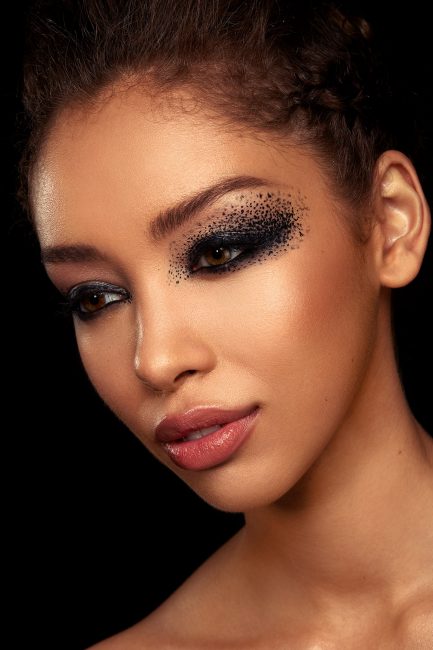
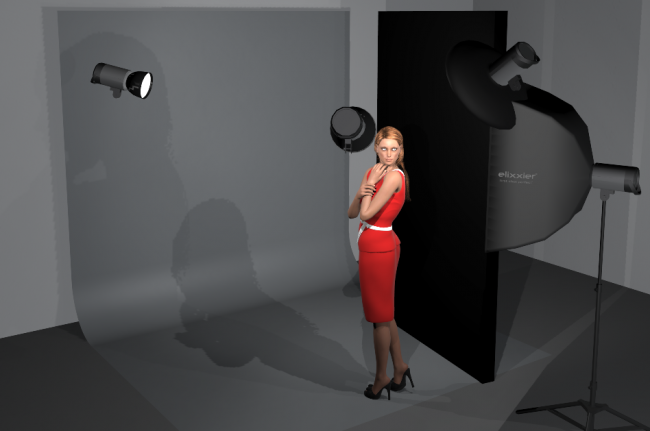
Profoto B1 in Dazzler Dish above. Profoto B1 in ii'x3′ softbox camera right.
Profoto B2 in Magnum Reflector Camera Left. Profoto B2 in Zoom Reflector Behind for Rim.
I'll besides preface this by saying I don't consider myself an expert of this craft. It wasn't until a year or so ago when I started experimenting with beauty work. And while I've shot over 100 different beauty photoshoots, and had the honor of being on set for some significant ad campaigns, I still think I take plenty to learn still but did want to accept an opportunity to share what I accept learned, to help those along who might simply be starting out.
Where Photographic camera is Male monarch
I'm not going to go into another battle about whether or non gear matters, just know that some critical pieces of gear are crucial when shooting beauty work. Mayhap the nearly important and useful tool when shooting dazzler, from a camera standpoint, is resolution. In dazzler photography, the high-resolution cameras like the Catechism 5DS, Nikon D850, and Sony a7RIII are king. Particularly when paired with a macro lens like the Sony FE 90mm f/2.8 G Macro, Nikon 105mm f/2.8G Micro, or my personal favorite, Canon 100mm f/ii.8L IS, the resolution gives you incredible cropping power, allowing you to plough a full face up shot into a macro shot highlighting a single detail. This is incredibly important considering while you may want a macro shot highlighting lips, the modeling agencies will only have a use for information technology if you take something full faced as well, and information technology'southward of import to keep them happy as well.
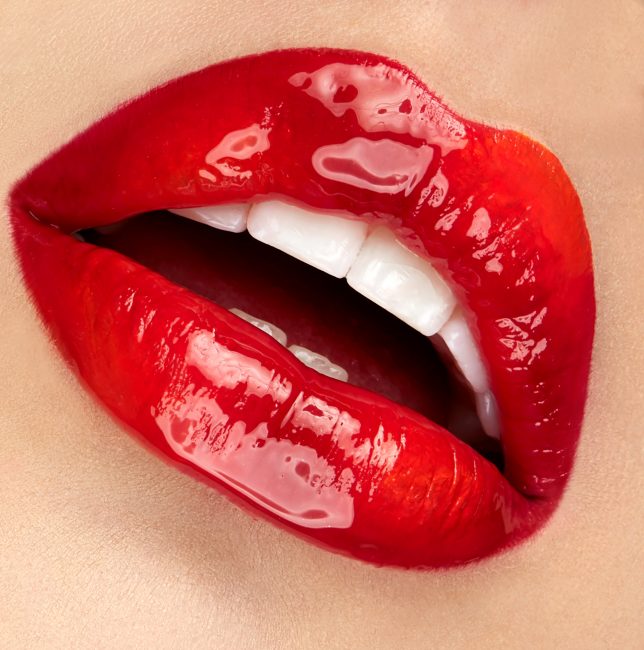
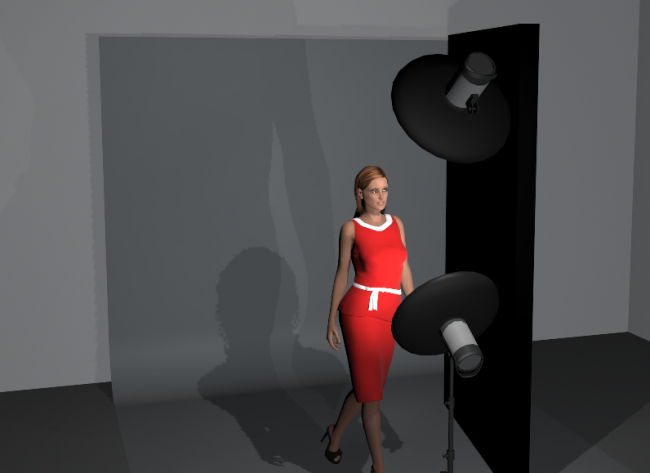
Profoto B1 w/ Beauty Dish Above. Profoto B1 west/ Beauty Dish Beneath. Blackness Flag for Calorie-free Control
As e'er, these suggestions come with some caveats. While resolution and a macro lens are important, they're not a complete requirement when shooting beauty work. For the first six months of my dazzler work, I was shooting with a Catechism 85mm f/1.2L II and Canon 5d Mark 3. The resolution of the Canon 5DS, Nikon D850 and Sony a7rIII is great, and it'll only make the procedure more than pleasant, only not a complete requirement. (I call this the gear discussion hyperbole, where when you say y'all should use a specific piece of gear, it must automatically be followed by someone saying "I can do it with less").
Lighting Your Dazzler Shoot
Lighting can be quite the challenge when shooting beauty work, but it's quite easy if you lot stop and recall about what your goals are. For me personally, I have three ready goals when lighting a beauty shoot. With all portrait work, I want to brand sure some light is in the optics reflecting back into the camera, every bit otherwise you risk getting the 'expressionless eye' look. The second goal I have when lighting beauty work, is that I want some dimension in the lighting, creating gradients of lighting throughout the peel. These gradients of lighting will give your images a three-dimensional effect, and can easily be achieved by positioning your lighting at diverse angles and agreement your lighting ratios. The final dominion for beauty lighting is to employ lighting that is flattering to your subject; later all, this is beauty photography, right?

Profoto B1 westward/ White Beauty Dish Above. Profoto B1 Photographic camera Left west/ 2'x3′ Softbox.
Bounce from Below, Blackness Flag on the Right & Left
Adding Dimension to your Lighting
The starting time principle is like shooting fish in a barrel, make certain you have a catchlight in the eyes, simply how does one create dimension with their lighting? Well, I exercise information technology by using flags, in the same fashion I utilize lights, to create shadows instead of highlights. To use flags, all y'all need to know is an unproblematic understanding of lighting – dark colors absorbs light, light colors reflect light. This is the reason why Catechism and Sony'due south zoom lenses are painted white, which helps reflect low-cal, and can be a large difference maker when shooting in the Sahara Desert for days at a time.
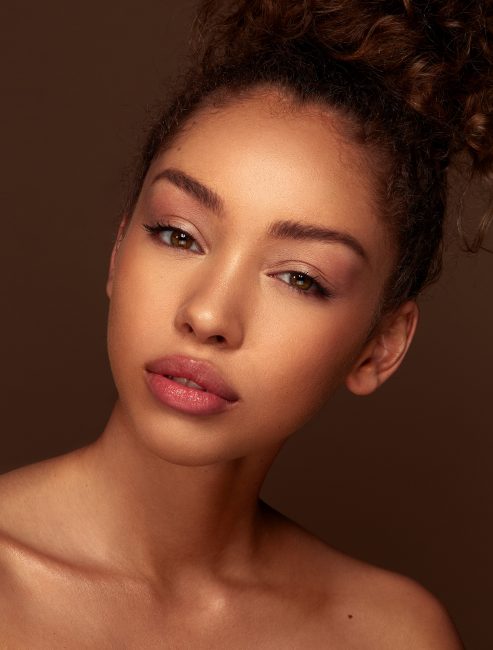
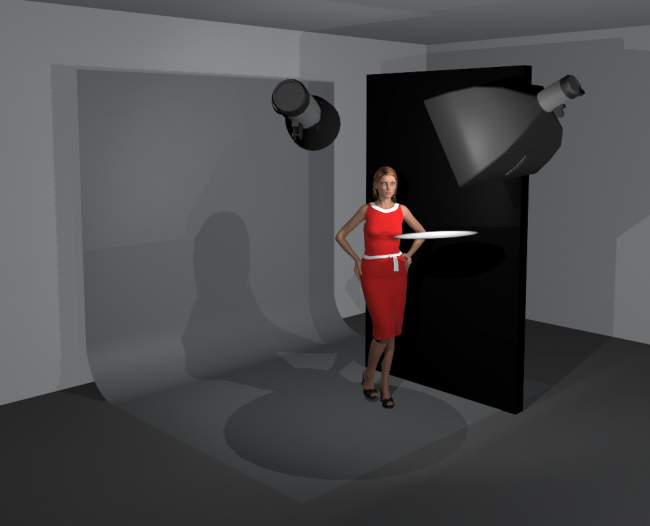
Profoto B1 Above in 2'x3′ Softbox. Profoto B1 Camera Left w/ Magnum Reflector.
White Bounciness from Below. Black Flag Photographic camera right
Using black flags can help control your highlights and shadows, giving yous more dimension in your images. And this added dimension can be cheap. For case, well-nigh of my black flags are naught more than a black posterboard purchased at a craft store for a couple of dollars.
Simply flags aren't the merely style to add dimension to your lighting. The same principles tin be washed by using grids, or by positioning your light at angles, and employ feathering techniques to have better light control.
Finding Flattering Light
The tertiary lighting principle I use for beauty photography is to discover a flattering light for your subject. This can be done with a few observations earlier the shoot. For starters, I almost e'er broad low-cal my beauty subjects, as it creates a softer, more elegant, calorie-free when compared to short lighting, which produces more drama. Secondly, have an understanding of the concept board, as well as the skin texture of your discipline. For example, if nosotros're going for a glossy look, y'all'll mostly utilize smaller light modifers, as they will produce harder light and more contrast. If the subject has larger pare pores, a larger light source will help minimize the skin texture and give a softer, more elegant look. Having an understanding of your concepts, field of study, and lighting principles volition provide you with a better understanding when information technology comes to execution.
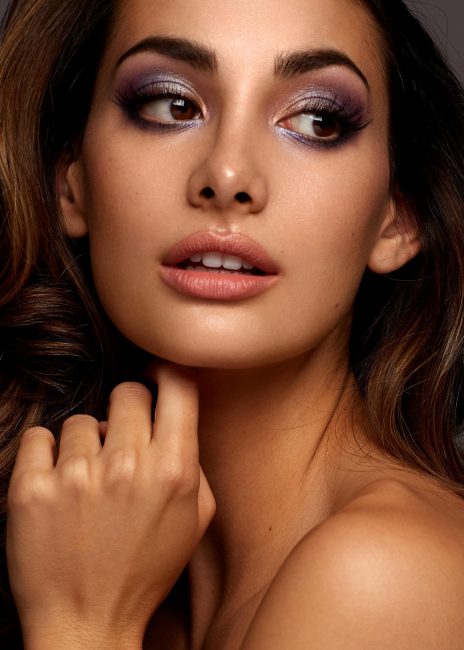
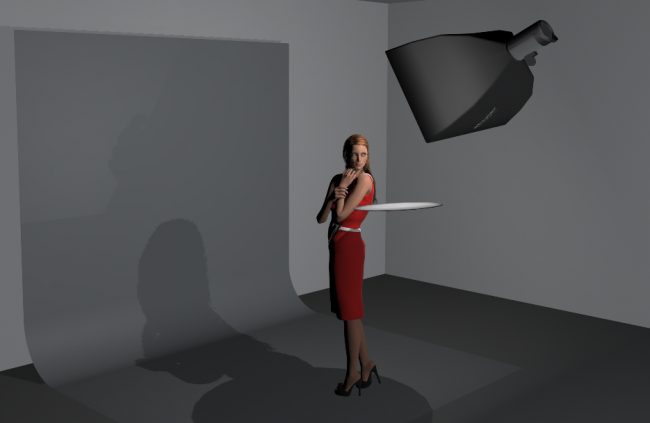
Profoto B1 west/ 2'x3′ Softbox In a higher place. White Reflector Beneath.
Standard Butterfly Lighting
For this reason, clamshell/butterfly lighting is usually regarded every bit 'Beauty Lighting', as it's a flattering light for a broad range of subjects. Clamshell/Butterfly lighting is washed past having your main low-cal overhead, aimed downwardly at your model, and a 2d low-cal source from below (usually a reflector) to help diminish shadows created by the nose and other features on the face. Looking through images, you'll see this lighting technique is used for the bulk of beauty photography, though some of the all-time work comes through experimenting.
Camera Settings
Without a doubtfulness, when it comes to dazzler photography, finding the right camera settings is among the easier tasks. Because y'all're (likely) shooting in a studio, yous have the reward of consistency in your lighting, and the advantages of that really prove when choosing your camera settings. Because beauty photography is about the details, I more often than not recommend shooting with an aperture prepare betwixt f8-f16, so that your details are in focus. And because you're trying to create a clean paradigm, ISO is unremarkably fix to it's lowest setting, with your shutter speed ready to its maximum sync speed (Usually 1/160th or 1/200th). Nevertheless, as e'er, there are no rules when information technology comes to beingness artistic, then notice settings that all-time match your aesthetic, as these are only starting guidelines.
Workflow and Retouching
Now that you have a better understanding of the technicals, you'll want to build a strong workflow and programme for retouching. When it comes to workflow, I highly recommend tethering, every bit information technology gives the hair stylist and makeup creative person the ability to see the shots as they're taken and make any adjustments as needed. A couple of weeks ago, I put together a short guide to get y'all started on tethering, which should help you get a meliorate understanding of how it works and why you should consider it. As for retouching, I won't go also far into that, as it's an artform in its own right, simply bank check out some guides put together past our friends over at Retouching University that assistance you get started on building the proper workflow for retouching.
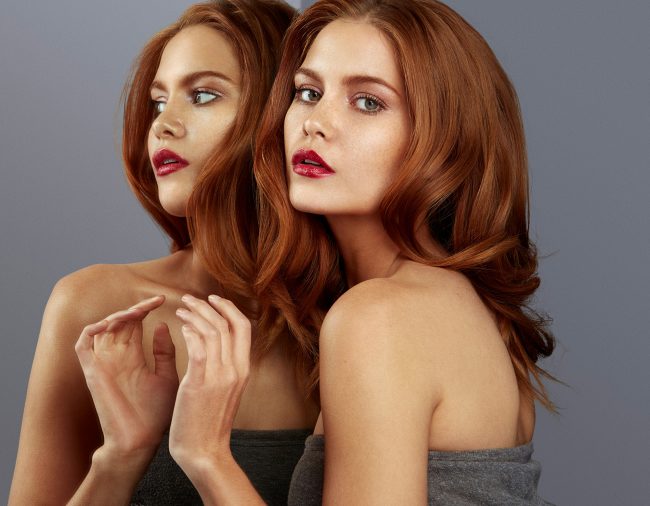
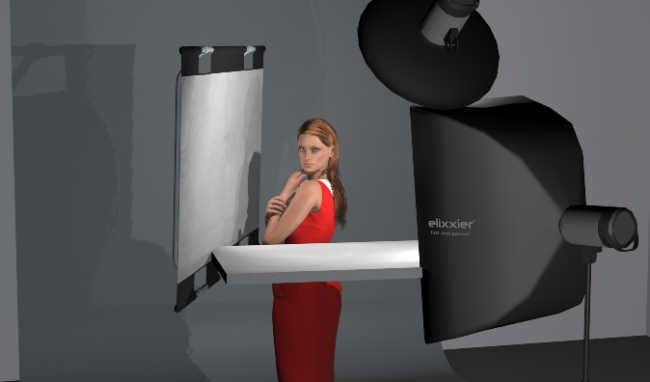
Profoto B1 in Beauty Dish above. Profoto B1 in 2'x3′ softbox photographic camera right.
Reflector from below. Mirror Camera Left
Finding your Team
The final topic I want to touch on is perchance 1 of the most important. Makeup artists are very much the star of beauty photography sessions, then it'southward important to find i who tin can match your vision and assistance compliment the work. When casting for a makeup creative person, I usually ask to see their beauty portfolio if they have them. The techniques applied to beauty makeup are quite a bit unlike than what yous'd find with conjugal or outcome photography, so it's important to find someone to match the style. And same goes for models. While a model might exist great when on location, they could actually struggle when shooting in the studio, where subtle expressions are key. Additionally, pay attending to features you might ignore when shooting other styles of photography. With beauty, skin tones, skin texture, and features like the eyes and lips all become far more important when you're focusing on them for a beauty campaign.
Hopefully, this guide has given you a starting point if you wanted to try your mitt at beauty photography. As always, perhaps the most neglected technique with this kind of stuff is finding the proper inspiration when shooting beauty. For me, I am regularly sifting through the Instagram tag #beautyphotography, but I also personally love the work of Ben Hassett, Kendra Paige, Jenn Collins, and William Clark. You're even welcome to follow me on Instagram if you demand additional inspiration, and as always, if you have any other insight or techniques, feel free to share them in the comments beneath.

Writer: Zach Sutton
I'1000 Zach and I'1000 the editor and a frequent writer hither at Lensrentals.com. I'k too a commercial beauty photographer in Los Angeles, CA, and offering educational workshops on photography and lighting all over North America.
Source: https://www.lensrentals.com/blog/2018/01/getting-started-in-beauty-photography-why-how-what-gear/
Posted by: rothcomn1971.blogspot.com
0 Response to "What Lens To Use For A Makeup Shoot"
Post a Comment